Twelve Days of Orchestration
Forget partridges in pear trees. Here’s a holiday game: twelve tiny orchestration tricks, one for each day.
As we approach the final week of December, I’m usually long past the Christmas playlists. Still, even when Sleigh Ride fatigue has set in, there are certain colours and textures that instantly signal “holiday” to my ear. I’ve gathered a short list of the little details I catch myself reaching for — the subtle touches that bring a bit of December into the room, even when no one has asked for anything festive.
It’s a vocabulary I’ve built over the years: first by listening and analysing, then by arranging pieces “in the style of,” and eventually by creating my own versions. What comes out is always an amalgam of tradition, experience, and whatever new ideas emerge in collaboration with a singer, a producer, or the song itself.
1. Harp harmonics as celesta accents
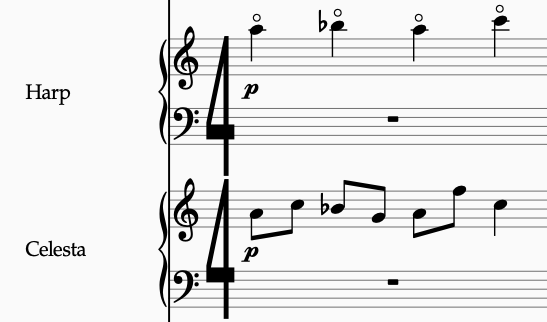
The celesta is an obvious holiday colour — a lineage that runs from The Nutcracker straight to Home Alone. But one trick I keep returning to is using harp harmonics to accentuate individual celesta notes. The blend adds a soft, glassy lift that feels instantly seasonal without being heavy-handed. It works especially well in the studio, where you can nudge the harp slightly forward in the mix and let the two instruments fuse into a single shimmer.
2. Alternating harp harmonics as motion
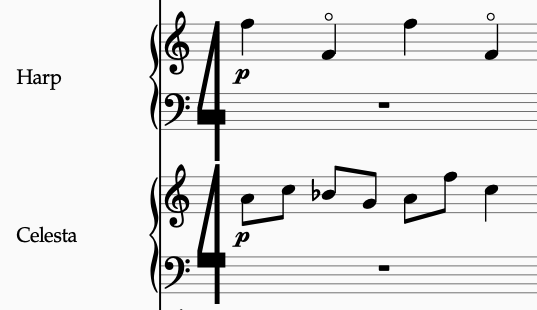
In quiet sections with long string chords and no clear rhythm from the orchestra or percussion, I often use alternating harp harmonics to create a gentle sense of forward motion. Think of it as a soft backbeat: a single chord tone on beat 1, followed by its harmonic counterpart on beat 2. It’s subtle, but it keeps the music breathing. Depending on how much sparkle the moment can handle, you can double the pattern with vibraphone or crotales for an extra hint of light.
3. Bass clarinet as the sole bass voice in lighter textures
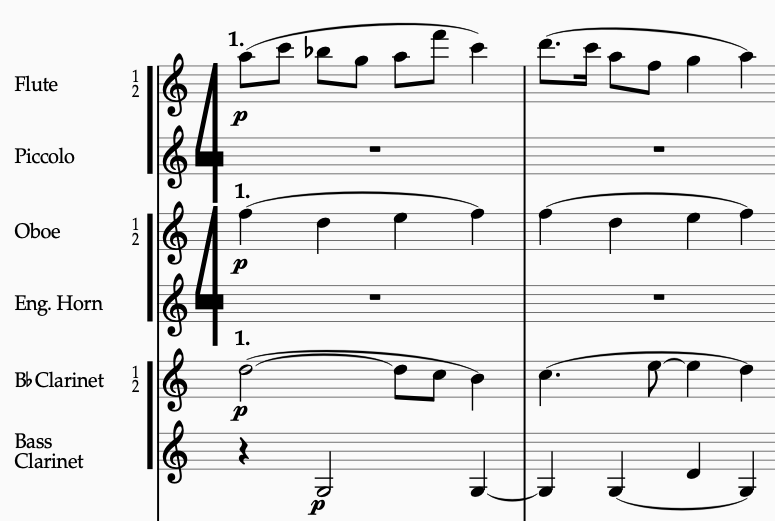
In lighter textures, you can often drop the traditional string bass line entirely and let the bass clarinet handle the foundation on its own. The colour is warm, focused, and leaves plenty of air in the arrangement. On top of that, small figures in woodwinds, upper strings, or muted brass can sit comfortably without the low register feeling crowded — the bass clarinet keeps everything grounded without adding weight.
4. High harmonics on the back desks, lush chords gli altri
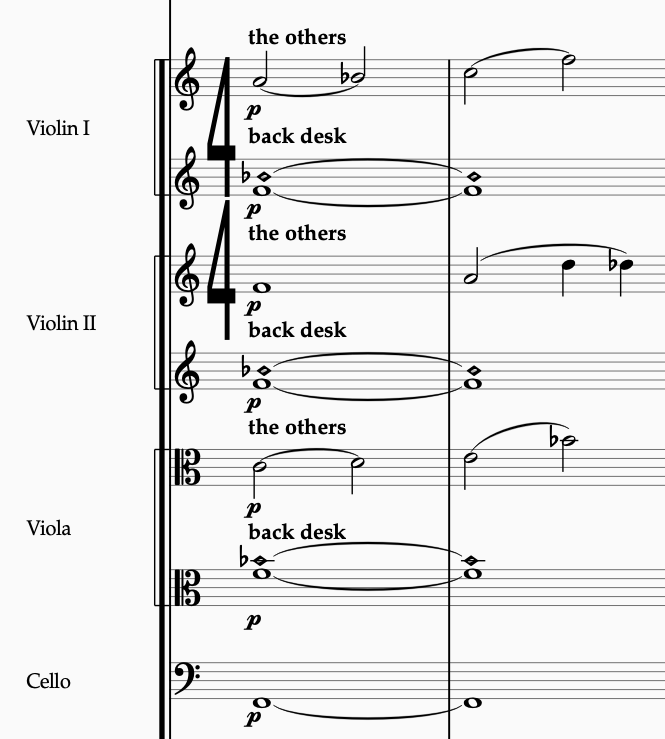
Lush string chords are a staple in this style, but sometimes you want a single high tone to hover above the harmony. Instead of putting it on the front desks, assign it to the back desks as a harmonic. The extra distance from the Decca tree softens the colour, keeps it from dominating the texture, and lets the chord glow rather than glare. It becomes a gentle sheen instead of a spotlight.
Going old school
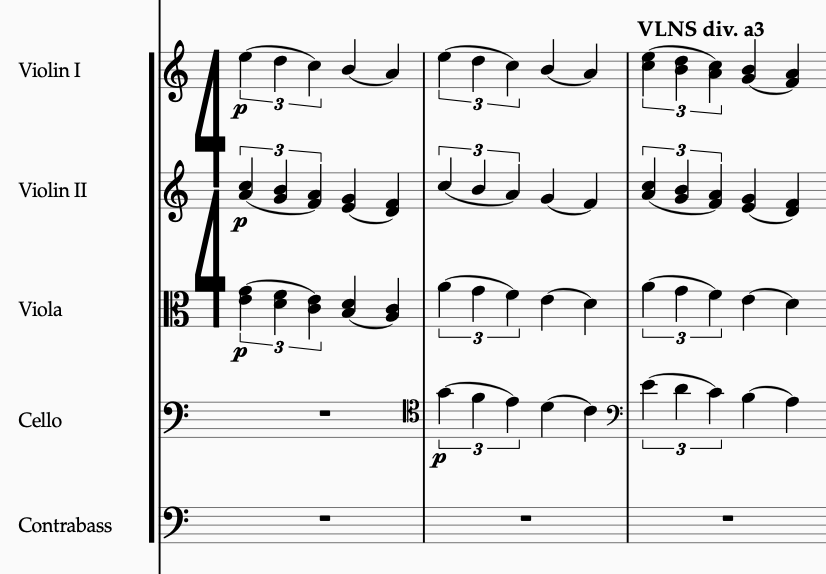
5. Four- or five-way close in violins and violas
For small melodic motions or more static harmony, you can borrow the classic big-band close-voicing approach. Use four- or five-way close chords: start from the top note and stack three or four chord tones beneath it, or repeat the top note an octave lower to anchor the voicing. Distribute the voices evenly across violins, violas, and occasionally cello. Avoid divisi within a single section; if the numbers don’t line up, keep Violin I in unison, or let the cellos divide, with the inner half taking the lower tones. The result is a warm, vintage density without becoming heavy.
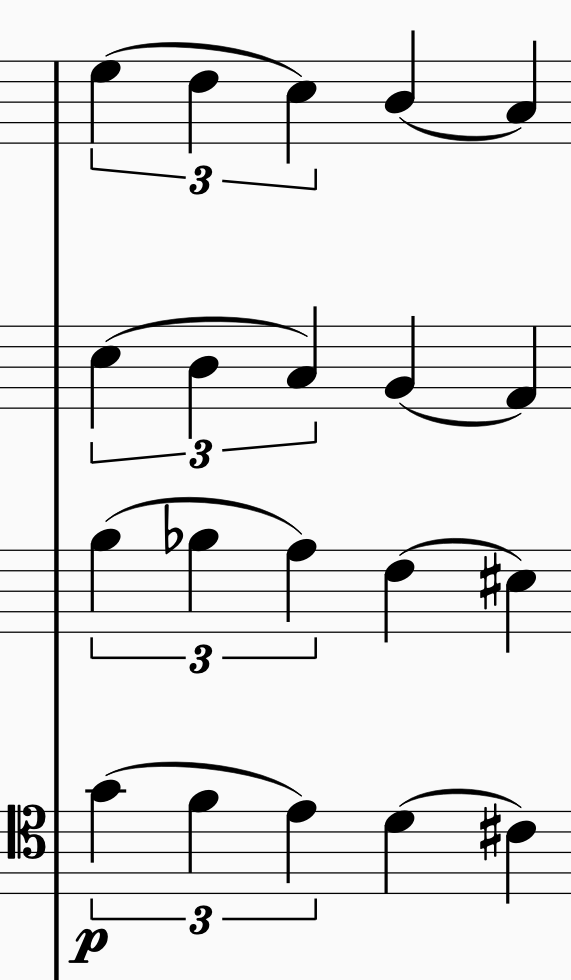
6. Harmony: the 13♭9 “Mancini” colour
These close voicings come alive when you lean into what I think of as classic Mancini harmony. Bring out your major 9s, explore the 13♭9 colours, and don’t forget: the minor-6 chord built on the fourth degree is arguably the most “holiday” sound you can get. Used sparingly, these sonorities add instant warmth without slipping into sentimentality.
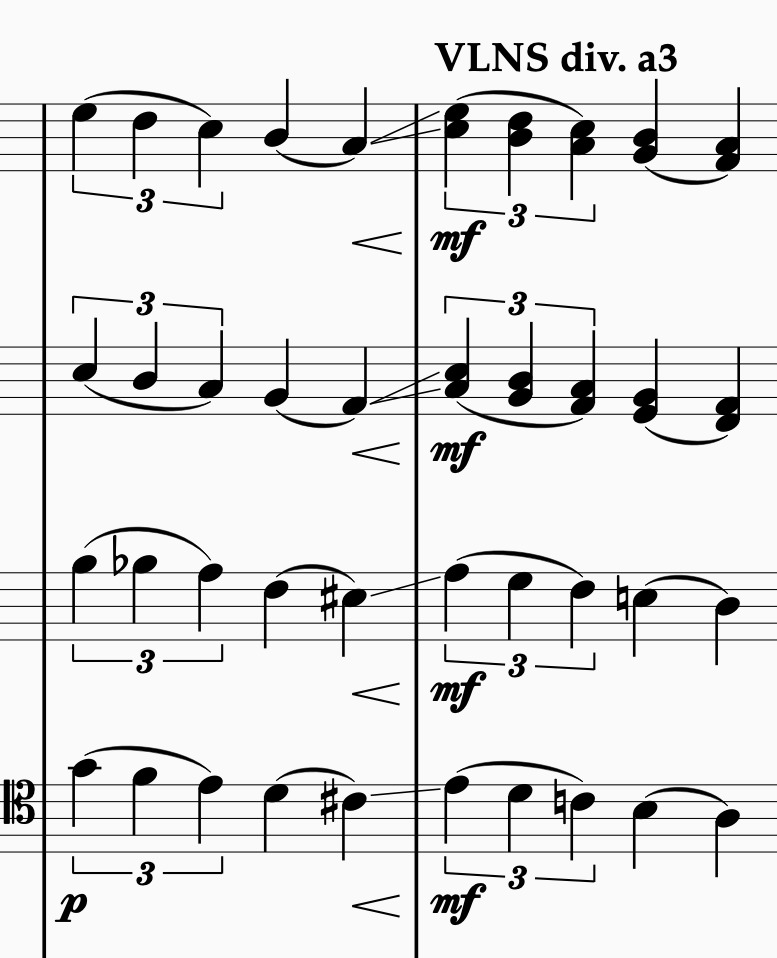
7. Portamento into key chords
When working with these lush harmonies, it’s worth considering an occasional notated portamento up into a key chord. Used strategically, it can act as a small “micro-climax” that aligns with the melody, or as a gentle lift that fills the space between a soloist’s phrases. It’s a tiny gesture, but when timed well it adds a vocal quality that ties the whole moment together.
Motion
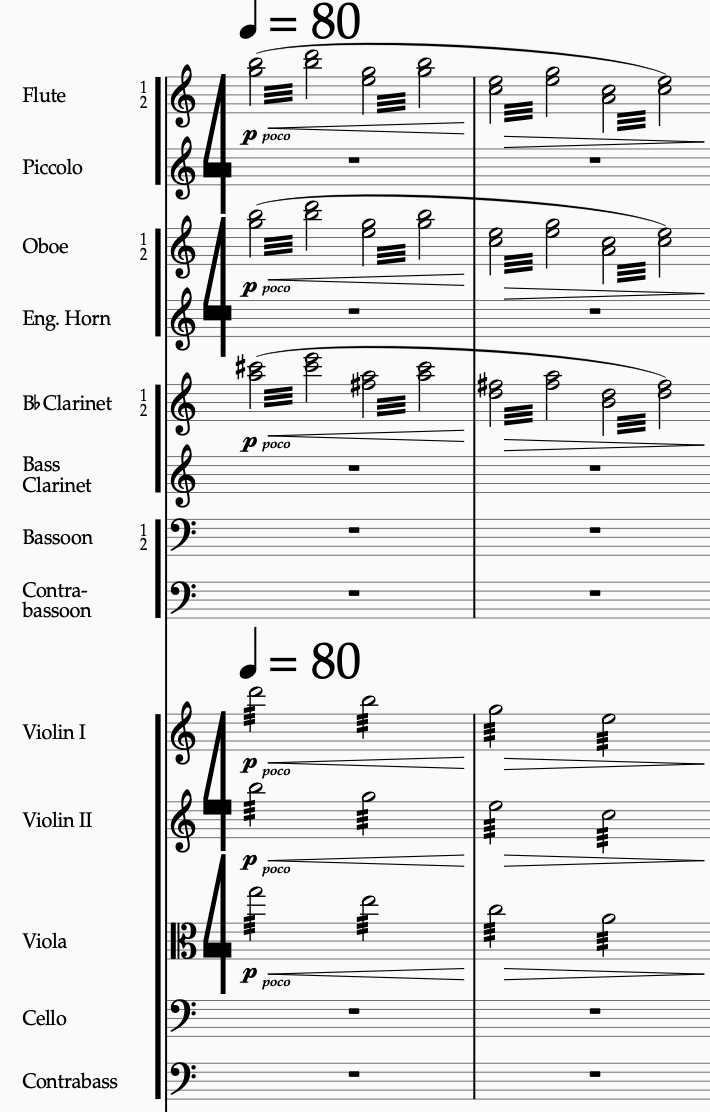
8. String tremolos and woodwind trills
Combining string tremolos with woodwind trills — as long as they share the same pitches — can create a surprisingly magical texture. It works especially well in intros that need to drift gently toward a solo entry. The tremolos provide the shimmer, the trills add a touch of breath and motion, and together they settle into the harmony without calling attention to themselves.
9. Motion through high-register figures
A repeating figure in the top register can add what producers often call “sparkle.” Violins and flutes are the most reliable tools here. Keep it high — avoid strict octave doubling — and let the line shimmer rather than thicken. Depending on the arrangement, you can layer celesta, harp, piano, or glockenspiel to taste. In that case, an occasional stray octave above or below can actually help the texture breathe and give the pattern a brighter edge.
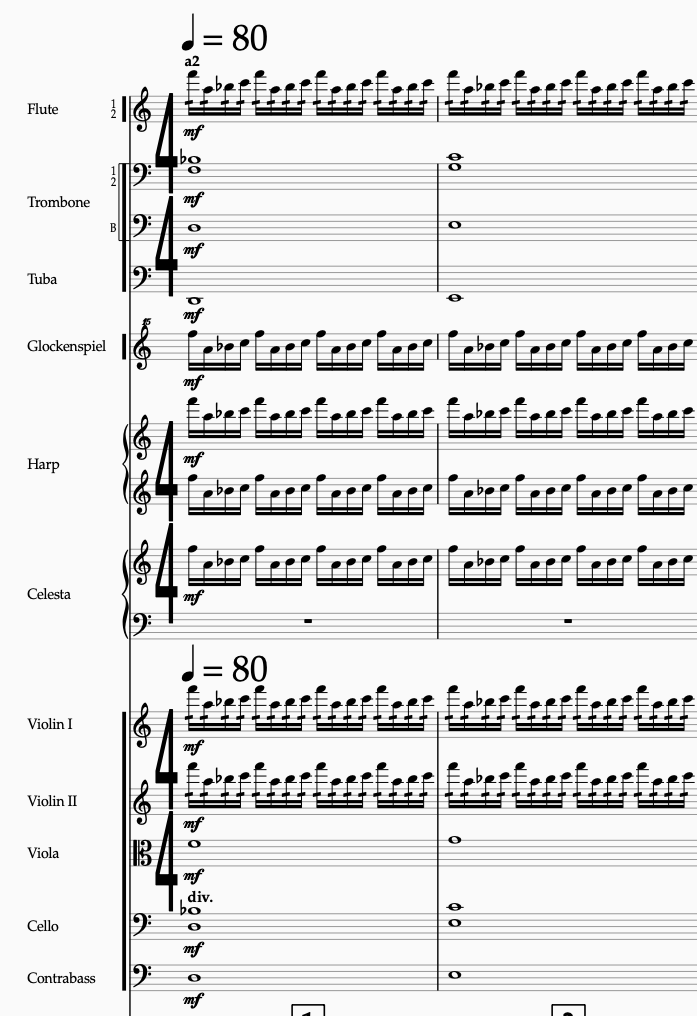
10. Magical runs
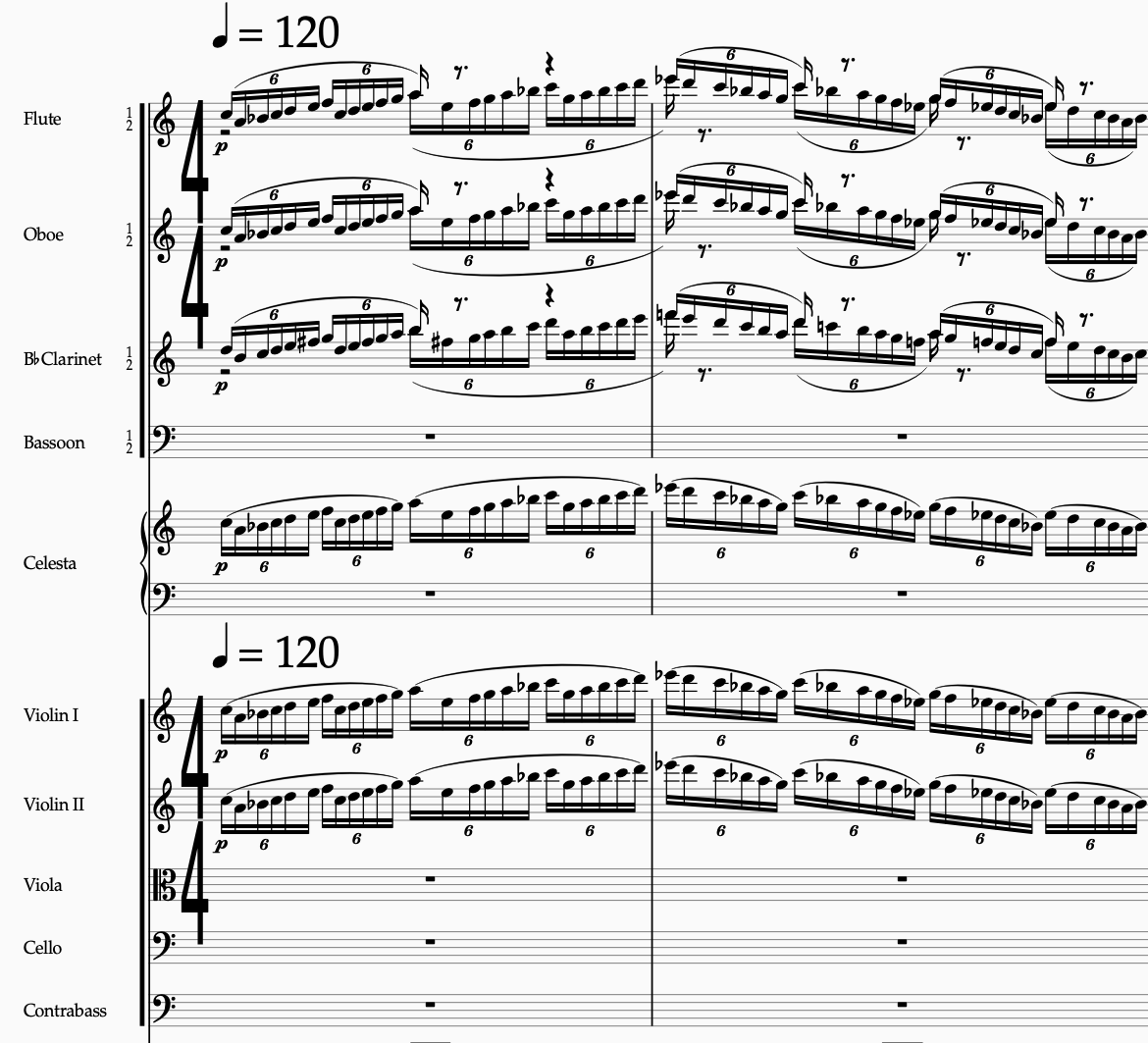
For a general sense of “magic,” you can paint up-and-down runs across the harmony. The key is simple: make sure the notes landing on beat 1 are chord tones. You can score the runs in one or two octave layers, as long as more than two woodwinds are playing at any given moment — that’s what gives the line its buoyancy. Double with piano, celesta, and/or strings, and you get a perfect shimmering bed above which a brass melody can shine without effort.
11. Motion with call & response
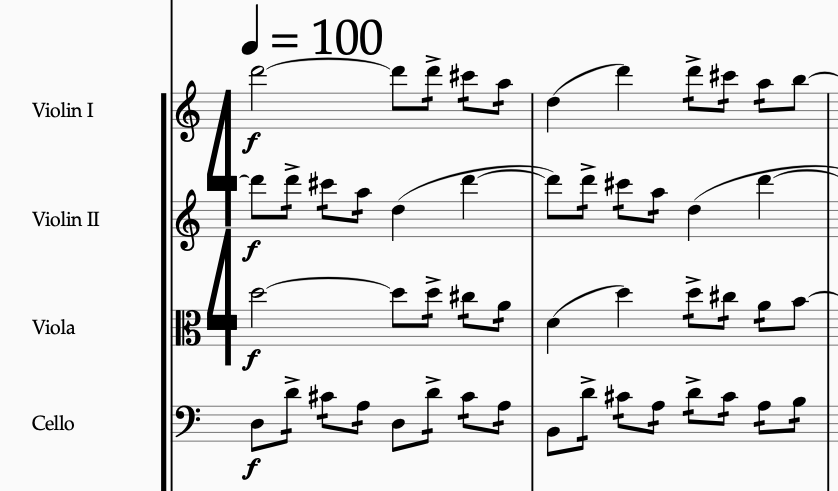
For a bit of “stereo” rhythmic motion, I often borrow a short fragment from the melody and place it in the first half of the bar in Violin I and in the second half of the bar in Violin II. The remaining beats can be filled with notes that either harmonise with — or gently rub against — the original figure. It creates a subtle call-and-response that feels lively without drawing focus. You can easily double the pattern with violas or cellos an octave below to give the gesture more depth.
12. Motion through regal brass
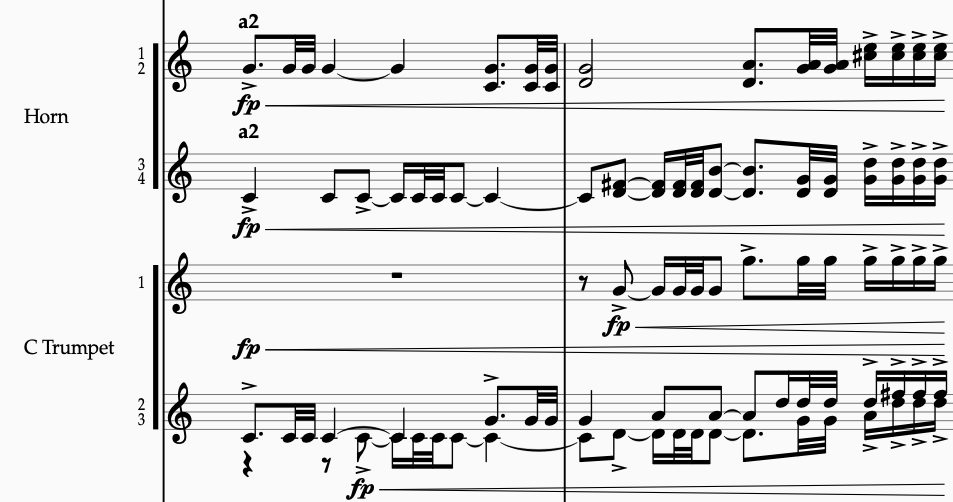
Sometimes you need that unmistakable sense of festive grandeur. When that’s the brief, I reach for the trumpets. In my best Respighi-inspired mode, I’ll craft small fanfare calls for trumpets, trombones, and horns — short, bright gestures that push the energy forward and drive the music toward a climax. It’s a clean way to add momentum without overwhelming the rest of the arrangement.
None of these ideas are rules, of course. They’re just colours I find myself returning to when the music needs a little glow — the small gestures that accumulate into something unmistakably warm. December has a way of inviting that kind of writing: familiar shapes, gentle motion, and textures that feel like light in a cold room.
Use what fits your project, leave the rest in the drawer, and let the season shape the details rather than the other way around. Sometimes the smallest choice — a harmonic, a shimmer, a single woodwind trill — is all it takes to make the moment feel a little more magical.